新泽西锌业公司,怀斯县
2022 ,弗吉尼亚能源公司与美国地质调查局合作,在国家地质和地球物理数据保存计划 (NGGDPP)的资助下,开始存档弗吉尼亚州阿米莉亚县莫菲尔德宝石矿的历史采矿记录和样本照片。
莫菲尔德宝石矿于1929被发现并开始开采。二战期间,这里被用作战略矿产的开采地。1949结束后,该矿场被关闭,直到1985才开始开采美丽的绿色天河石矿物。此外,经过多年的运营,该矿已生产出约80种不同的矿物。
莫菲尔德宝石矿是一座矿化程度很高的伟晶岩脉,长2000英尺,预计深度约为300英尺。历史上,这里曾开采云母、钽铁矿、天河石和大块黄玉。如今,它因亚马逊石而闻名于世。随着地下采矿的进展,岩石被吊起、堆积并散布到地面上以供收集矿物。即使是红色粘土也含有多年开采形成的大量岩石和矿物。
奥斯汀维尔石灰石公司的材料几十年来一直存放在一个旧仓库里,那里曾经是矿工们挂午餐桶和矿井工作后洗澡的地方。当新泽西锌业公司关门时,文件仍保留着当时的状态,就像一个时间胶囊。仓库上部的五个房间里隐藏着厚厚的白色石灰石粉尘,覆盖着一切,其中有一个名为“金库”的房间,里面有许多地图柜,里面装满了这座矿井的历史。
如需互动体验,请查看新泽西锌业公司的 ArcGIS 故事地图:

奥斯汀维尔的地质情况......

超级大陆盘古大陆 (Pangea) 形成于大约280万年前,当时所有大陆相撞,然后开始漂移,形成了更为现代的格局。
来源:AAA
使奥斯汀维尔矿如此成功的铅和锌源自何处?又是如何产生的?这个问题引出了矿山背后的地质故事——矿石的故事。与该地区的许多其他矿井一样,这座矿井的建造是因为有人在洞穴或岩石露头中发现了潜在的矿岩。
在奥斯汀维尔地区,人们在 Shady 组的白云岩中发现了人们所寻找的铅和锌。阴暗白云岩形成于大约500百万年前的寒武纪。当时,北美洲的土地被淹没在浅海之下。

阿普拉申山脉是在300多万年前北美洲和非洲祖先碰撞时形成的。

DTM 美国东部和加拿大阿巴拉契亚山脉
由于大陆位于赤道,气温较高,导致浅海和沿海环境中石灰岩沉积。石灰石由碳酸钙 (CaCO 2 ) 组成,形成于富含碳酸盐的沉积物(例如贝壳)被物理埋藏、压实并通过化学方法胶结成岩石。数亿年来,这种石灰岩在大规模的构造过程作用下暴露、隆起、褶皱和断层,同时也形成了阿巴拉契亚山脉。在此期间,原来的石灰岩在热和水的作用下变成了白云岩(CaMg(CO 3 ) 2 )。在微小的开放空间内和沿线,白云石被富含铁和锌的矿物(如闪锌矿、方铅矿和黄铁矿)化学取代。正是这些丰富的矿藏使得奥斯汀维尔矿场如此高产。
如今,奥斯汀维尔地区的寒武纪 Shady Dolomite 厚度约为2000英尺。铁矿石和锌矿石存在于 Shady 组中下部厚度为10 - 30英尺的板状透镜体中。这些矿体是采矿目标,并决定了奥斯汀维尔和艾芬豪矿的方向和范围。
该矿的历史......
The story, as written by Mr. Silas Morefield in the Lapidary Journal Jewelry Artist, says he was hunting on his land in September 1929 when he came across an outcrop of quartz with a large beryl crystal exposed. It was very familiar with the minerals of the older Rutherford Mine and Champion Mine, also in Amelia County, and he suspected that this outcrop may be a pegmatite. At some point, he drilled a hole in the outcrop, loaded the hole with dynamite, and shot it. He exposed large masses of mica and weathered amazonite.
Mr. Morefield operated a store and gas station in Amelia Court House, and he set some of his newfound mineral specimens in front of the store. Within two weeks of his discovery, a vehicle with travelers from the National Bureau of Standards (NBS) stopped by, and they saw the flashy specimens and inquired about the source of the specimens. Later, back in Washington, D.C., they told coworkers at the U.S. Geological Survey about their find, and the mine was then known to the geological world.
Mr. Morefield operated the mine by open cut methods from 1929 until 1931 when it was leased by the Seaboard Feldspar Co. and mined for amazonite, beryl, mica, and tantalite for about 3 years. Mr. Morefield resumed operations then leased it to Minerals Separation North American Corporation in 1942. This company was taken over by the Metals Reserve Company, and they returned the mine to Mr. Morefield in 1943. The Metals Reserve Company was a government agency under the Reconstruction Finance Corporation that was in charge of the national stockpile of "strategic and critical materials" for the WWII war effort and national mineral security. The critical minerals at the Morefield Gem Mine were mica, beryl, and tantalum minerals.
The U.S. Bureau of Mines first explored the deposit during the summer and fall of 1943 during which time they drilled four diamond drill holes and excavated four trenches crosscutting the pegmatite. Then two more definition diamond drill holes were drilled and an additional trench added.
In 1948, the U.S. Bureau of Mines returned to the mine and conducted experimental development and mining at which time they deepened the shaft to 115 feet; conducted underground diamond drilling to establish the wall rock/pegmatite contacts; drove a drift 75 feet at the 100-foot level; and extracted a large bulk sample by selectively shooting long drill holes ('longholes') in the high-grade part of the pegmatite. The purpose of this work was to test underground methods of mining pegmatite should mica, beryl, and tantalum become in critical supply. Deck Boyles of Amelia County bought the property from the Morefield Estate and used the shaft as a water source for serving customers with swimming pools for many years. He sold it to Warren (Bill) D. Baltzley in 1985 who then developed the mine as a recreational and commercial operation very much as it is seen today. Mr. Baltzley sank the 45-foot deep Baltzley Shaft and extended the stub drifts excavated by the U.S. Bureau of Mines at the 45-foot level and connected the old and new shafts. Mr. Baltzley sold the mine to the present owners, Sam and Sharon Dunaway, in March of 1996, and they have operated the mine ever since. In the intervening 19 years, the mine has been expanded and lengthened to 425 feet on the 45-foot level, 85 feet on the 32-foot level, and a new 60-foot level has been driven 135 feet in excellent pegmatite. This level has produced a number of very nice, large topaz crystals. The largest is now in James Madison University's museum and Virginia collection. Present work consists of two projects: the first, removing a very high-grade sill between the 45-foot and 60-foot level, which contains rare minerals and high-quality amazonite; and the second, extending the 60-foot level Northeast to break into the old U.S. Bureau of Mines test stope. The top of the U.S. Bureau of Mines stope is visible on the 45-foot level. Preparatory work is also taking place to examine and explore the 100-foot level, which is the present source of water for sluicing (flume) operations. This includes installing pumps to dewater the 100-foot level, removing rock and mud that has fallen in and filled the shaft bottom over many years when the mine was inactive. Mining in the years to come may well come from this level. No one had explored this level since 1949 when the U.S. Bureau of Mines ceased operations.

奇斯韦尔提供资金挖掘和提取地表铅矿床,他希望将其提炼成银。然而,奇斯韦尔的功绩却让他背负了巨额债务,引发了丑闻,并最终导致他突然死亡,死因被可疑地描述为“…由于精神持续不安而引起的神经质…”(见1766 ,《托马斯·杰斐逊文集》,第二辑)。杰斐逊的法律常识手册,编辑Konig 和 Zuckert)。
.jpg)
弗吉尼亚州怀斯县矿山的历史标记

奇斯韦尔庄园
奇斯韦尔去世后,他的财产被弗吉尼亚州没收,并由查尔斯·林奇经营。奥斯汀维尔遗址在独立战争前夕和独立战争期间成为了一个重要地点。1774年,奥斯汀维尔矿场是前往西弗吉尼亚州波因特普莱森特战役的游行队伍的集合地点。1775 ,奥斯汀维尔矿场成为芬卡斯尔决议的制定地,该决议认为,英国剥夺了殖民者的传统权利,因此,殖民者必须抵抗英国的控制,以维护这些权利。战争期间,美国军队需要铅来制造弹药,而铅主要由奥斯汀维尔和怀斯县的其他矿山生产和供应。由于其重要性,英国同情者于1780袭击了该矿,但袭击被镇压,林奇绞死了领导人。

摩西·奥斯汀

怀斯铅弹塔的内部运作。
鸣谢 DCR 和 Proctor, 2016 。
独立战争结束后,摩西·奥斯汀 (Moses Austin) 购买了这座矿场( 1780至1800 ),并将其从地面采石场改造成真正的地下采矿场。奥斯汀维尔镇曾是芬卡斯尔县的旧县治,以摩西·奥斯汀和他的兄弟的名字建立并命名。1800年代初,当时的老板兼熟练技工托马斯·杰克逊 (Thomas Jackson) 建造了两座铅弹塔和一座冶炼厂,用于制造枪支铅弹。牛,可能还有奴隶,提供了力量,使用滑车组将铅吊到塔顶。然后,铅被放入位于塔顶房间的熔炉中的水壶中熔化。熔化的铅通过塔顶的筛子从锅中倒出。不同尺寸的筛子会产生不同直径的铅丸。当每一滴熔化的铅自由下落150英尺到塔底时,它们会变成球形,冷却并硬化成小球,然后被收集在大水壶中的水中。(维基百科:https://en.wikipedia.org/wiki/Wythe_County,_Virginia)这些塔中发射的铅弹会顺着新河运送到下游,卖给商人和猎人,并最终在美国内战期间卖给南方邦联军队。

威斯县的铅弹塔州立公园,熔化的铅在这里被转化成美国内战所需的铅弹
1838年,新成立的 Wythe Lead Mines Company 采用了奥斯汀维尔工厂,直到1848年与 Wythe Union Lead Company(后来的 Union Lead Mine Company)达成新的协议。美国内战期间,南部邦联使用该矿井支援军事行动,因此,该矿井17 12 月1864和5 1865联邦骑兵烧毁过两次。这些袭击摧毁了洗选和冶炼厂的部分设施以及厂房。四天后,战争结束,矿井重建。
战争结束后,Bertha 矿业公司拥有了这座矿山,并开始利用矿藏生产锌板。1902年,新泽西锌业公司收购了该地并开采铅和锌。1924浮选工艺的发明使得产量迅速上升。奥斯汀维尔工厂将利用矿石生产铅和锌精矿,然后运往宾夕法尼亚州帕默顿的冶炼厂,在那里将其转化为锌金属和含铅锌颜料(NJhistory.pdf)。加工的副产品是石灰石,它也受到追捧并出售给当地农业企业。

奥斯汀维尔矿的浮选槽于大约1977将锌和铅精矿
从石灰石和白云石中分离出来

在产量高峰期,奥廷维尔矿山雇佣了数百名工人来开采铅和锌
大约1946 - 1949
20世纪是奥斯汀维尔矿场繁荣昌盛的时期,矿场规模不断扩大,新增了一个全新的地下矿区,称为艾芬豪矿场。这两座矿山由一条13 , 000英尺长的隧道连接,非常成功,运营了近80年,并在1970年代初达到产量高峰,拥有200员工,总收入为13 . 8万美元,并加工了超过1 . 2万吨铅锌精矿 (Foley, 2002 )。
1966年,新泽西锌业公司成为海湾西部工业公司的一部分,并成为美国最大的锌矿开采商,以马头作为标志。到 20 世纪1970年代末,由于铅市场萎缩和环境保护局标准的提高,奥斯汀维尔已经停止了地下采矿。(维基百科:https://en.wikipedia.org/wiki/Wythe_County,_Virginia)。
詹姆斯河石灰石公司于1982购买了该矿,并从地表采石场和大量尾矿中生产农业用石灰(“农业石灰”)。1996年,詹姆斯河石灰石公司被出售,四名员工决定购买位于奥斯汀维尔的房产并继续进行石灰石生产。到2006 ,公司业务已扩大到生产用于草坪和花园的袋装和颗粒状石灰石,销往整个东南地区。2010 ,该公司通过清理土地和恢复新河沿岸的44英亩土地来解决环境问题,然后将部分土地出售给弗吉尼亚州自然保护和娱乐部。
如今,人们可以通过参观新河步道州立公园来看到古老的原矿场遗址,该公园有超过182英亩的土地受到保护,以保留遗址的景观和历史意义。周围的石灰石尾矿已被清除,该地区已被重新开发为河床和湿地。(我们历史上最近的篇章)其中一座射击塔仍然矗立在那里,成为射击塔历史州立公园(新河步道州立公园的一部分)。该塔现已修复,并被指定为国家历史机械工程地标。实际的地下矿井已经充满了在其运行过程中不断抽出的水。旧工厂仍然屹立,并由奥斯汀维尔石灰石公司进行了翻新,该公司目前仍在生产 Aglime。(我们历史上的最新篇章)
我们收藏的历史文献...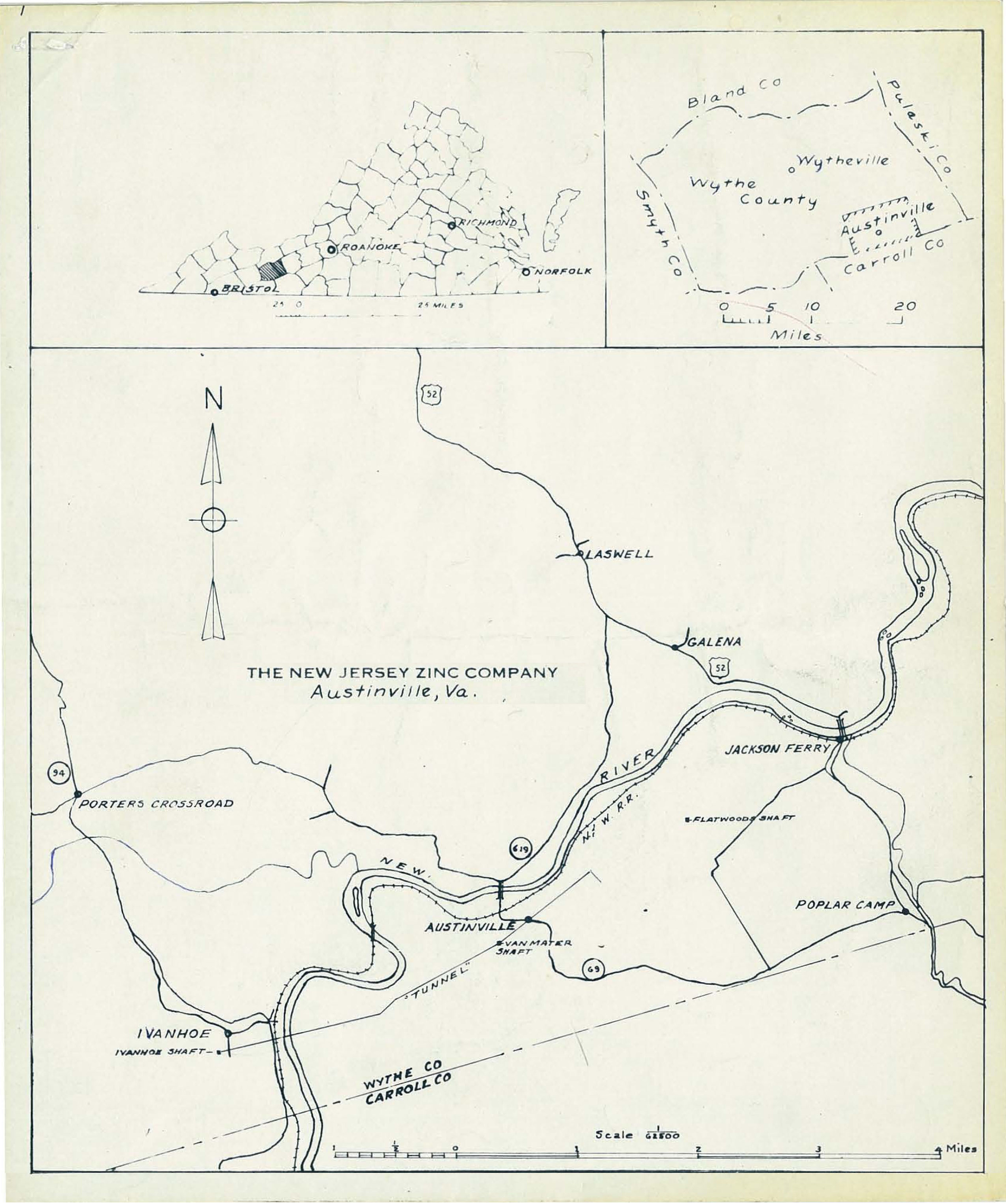
DMME 于2018年春季开始收集新泽西锌矿文件,当时 DMME 员工仔细打包并将一辆26英尺长的卡车从奥斯汀维尔矿场运回我们位于夏洛茨维尔的办公室,卡车上装满了历史采矿文件。清理了装满文件的箱子和柜子,上面覆盖着石灰粉,然后露出了精美的地图、手写的野外笔记本、航拍照片,以及其他可追溯到1900世纪初与数百年采矿作业有关的文件。当 DMME 的科学家和技术人员开始仔细清理、清点、编目、扫描和创建这些记录的元数据时,新泽西锌公司的故事就此展开。
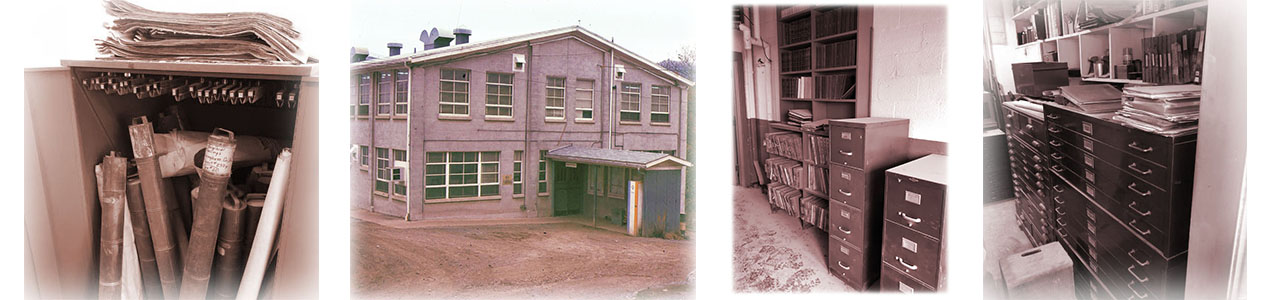
历史材料,奥斯汀维尔石灰石公司, 2018

了解有关弗吉尼亚州历史采矿的更多信息......

自从人类开始在这片土地上居住以来,弗吉尼亚州就以各种形式进行采矿。弗吉尼亚州已开采超过50矿产,为该州的经济做出了巨大贡献,但有时也会对公众的健康和安全以及环境造成不利影响。
从历史上看,弗吉尼亚州的铅矿床在独立战争和内战中都发挥了重要作用。怀斯县奥斯汀维尔附近有重要的铅矿床,用于开采制造子弹的铅。

自1870年代以来,弗吉尼亚州就开始开采锌。Shady Dolomite 内最重要的锌铅矿床是位于怀斯县的 Austinville-Ivanhoe 矿体群。
当今的石灰石开采

在弗吉尼亚州,石灰石、白云岩、砂岩、石英岩、花岗岩、片麻岩、玄武岩、绿岩、细晶岩、板岩和大理石均被开采用作碎石。弗吉尼亚州的部分石灰石产品也被加工用于制造水泥和石灰。弗吉尼亚州西南部开采的石灰石也生产矿山安全粉尘。这种粉尘被施用于煤矿的顶部、墙壁和底部,以防止爆炸并提高矿井内的整体能见度。
参考文献:
Foley,Nora 和 Robert R. Seal II, 2002 ,《地质环境生命周期模型:弗吉尼亚州奥斯汀维尔平台碳酸盐岩矿床》,美国地质调查局公开文件报告02 - 195
Whisonant,Robert C., 1996 , 《弗吉尼亚州西南部的地质与内战:怀斯县铅矿》 ,《弗吉尼亚矿产》第42卷,第2期。